
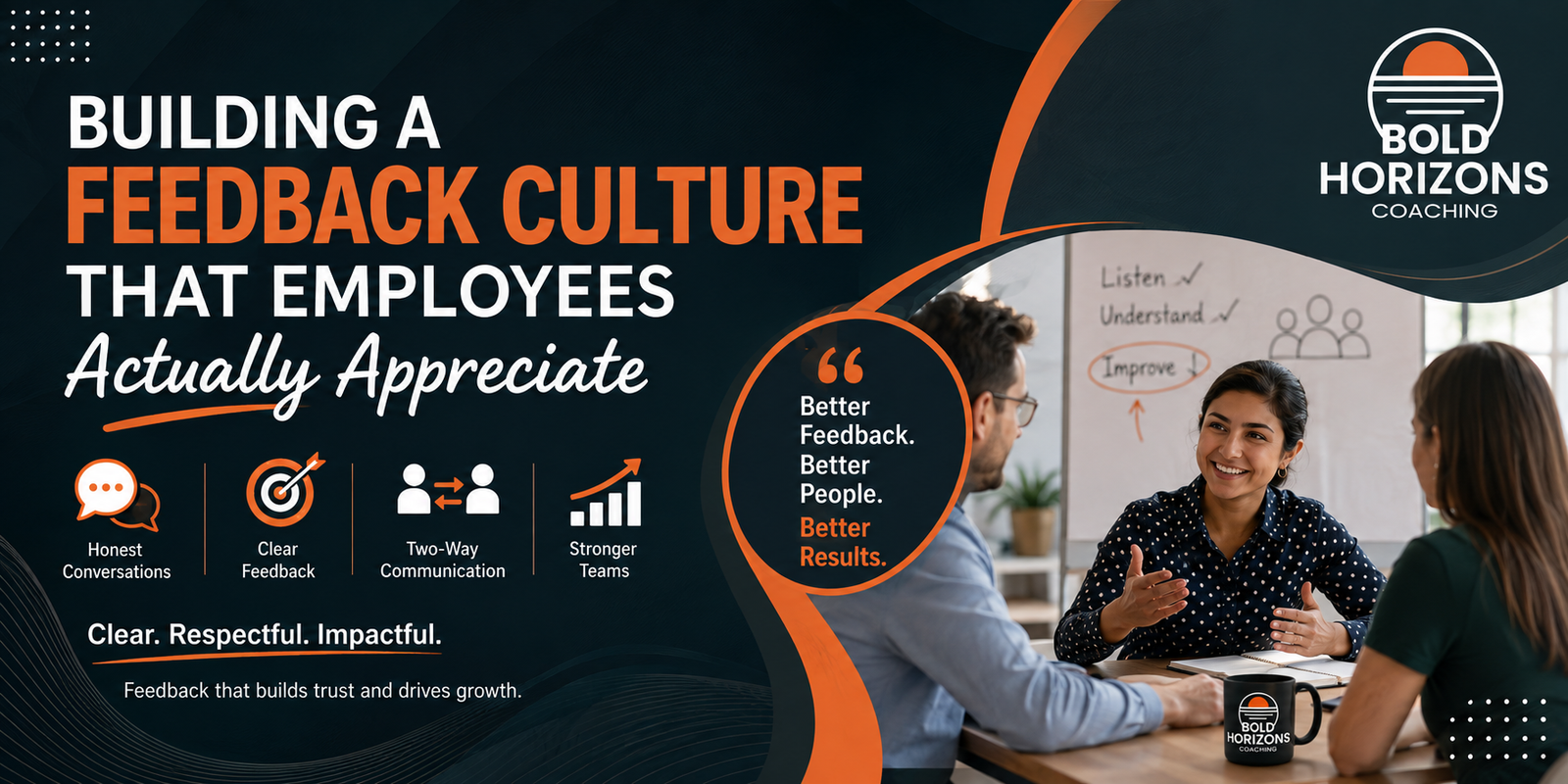
After her company rolled out a new ‘radical candor’ initiative, Angela watched morale quietly decline instead of improve. Managers, newly encouraged to give more direct feedback, delivered it bluntly and often in the moment, sometimes in front of others. Employees described the new culture not as honest, but as harsh.
The company had the right instinct and the wrong execution, a distinction that determines whether a feedback culture strengthens a team or slowly wears it down.
Employees consistently say they want more feedback, not less. Yet feedback initiatives frequently fail because organizations focus on increasing the quantity of feedback without building the structure that makes it land well. More feedback delivered poorly does not build a stronger culture. It builds a more anxious one.
Why Most Feedback Efforts Fall Short
Feedback is one of the most requested and most poorly delivered elements of workplace culture. Common failure points include feedback that is vague, feedback that arrives too long after the moment it describes, and feedback that focuses on personality rather than specific, observable behavior. Each of these failures makes feedback feel like judgment rather than support, which is exactly what employees resist.
A useful reframe is that the goal of a feedback culture is not more comments about performance. It is a shared, trusted process that helps people improve and feel genuinely seen while they do it. Employees can usually tell the difference between feedback given to help them and feedback given to protect the person delivering it, and that distinction shapes how the message is received far more than its content does.
A Structured Model for Delivering Feedback Well
One of the most widely used and reliably effective frameworks is the Situation-Behavior-Impact model, which keeps feedback specific, observable, and connected to a clear outcome rather than a character judgment.
| Component | Purpose | Example Phrasing |
| Situation | Anchor the feedback to a specific, recent moment | “In yesterday’s client call…” |
| Behavior | Describe exactly what was observed, without interpretation | “…you interrupted the client twice while they were explaining their concern.” |
| Impact | Explain the effect that behavior had, on the outcome or on others | “…which made it harder for them to feel heard, and they repeated the concern twice.” |
Making Feedback a Two-Way Habit
A genuine feedback culture is not one where leaders evaluate employees more often. It is one where feedback flows in both directions and at every level, including employees offering feedback to their managers. This reciprocity is what separates a culture of trust from a culture of surveillance, and it requires leaders to model receiving feedback well, not just delivering it.
• Ask for feedback on your own leadership regularly, not only during formal review cycles
• Respond to feedback about yourself with curiosity rather than defensiveness, even when it stings
• Separate feedback conversations from performance reviews so they don’t only happen when something is at stake
• Recognize and reinforce improvement publicly, not just areas that still need work
• Train managers specifically in delivering feedback, rather than assuming it is an intuitive skill
Angela’s company eventually paired its candor initiative with training built around the Situation-Behavior-Impact model, along with a clear expectation that difficult feedback happens privately, not in the moment in front of a group. The shift in tone was immediate. Employees began describing feedback conversations as useful rather than something to dread.
Timing matters as much as structure. Feedback given days or weeks after the moment it describes loses much of its usefulness, since the person receiving it has likely already moved on mentally and may not remember the specifics clearly. Leaders who build a habit of brief, timely feedback, delivered close to the moment it applies to, see far better results than those who save every comment for a quarterly review.
Where Coaching Strengthens the Culture
Executive coaching plays a valuable role in building feedback culture because it gives leaders a place to practice difficult conversations before they happen with real stakes attached. Many leaders avoid giving direct feedback not because they don’t see the issue, but because they haven’t found language that feels both honest and respectful. Coaching helps leaders build that language and the confidence to use it consistently.
Coaching also helps leaders process the feedback they receive themselves, which is often the harder half of the equation. A leader who models genuine openness to feedback gives their entire team permission to do the same.
The Bottom Line
A strong feedback culture is not built by giving more feedback. It is built by giving feedback well: specific, timely, connected to real impact, and flowing in both directions. Organizations that get this right create teams that grow continuously, rather than teams that brace for the next review.
A year after the retraining, Angela’s engagement survey results showed a marked improvement in how employees described feedback at the company, not as something to survive, but as something that genuinely helped them do better work.
Bold Horizons Coaching helps leaders and teams build feedback practices that strengthen trust rather than erode it. If your organization’s feedback culture needs more structure or more heart, we would welcome the opportunity to help you build both.