
Tom was the best engineer his company had ever promoted into management. He understood the codebase better than anyone, could solve problems others had given up on, and had earned every bit of respect his technical reputation carried.
Within a year of his promotion, though, three of his strongest engineers had quietly requested transfers. None of them questioned his expertise. All of them, in different words, said the same thing: he made them feel small when they didn’t already know the answer.
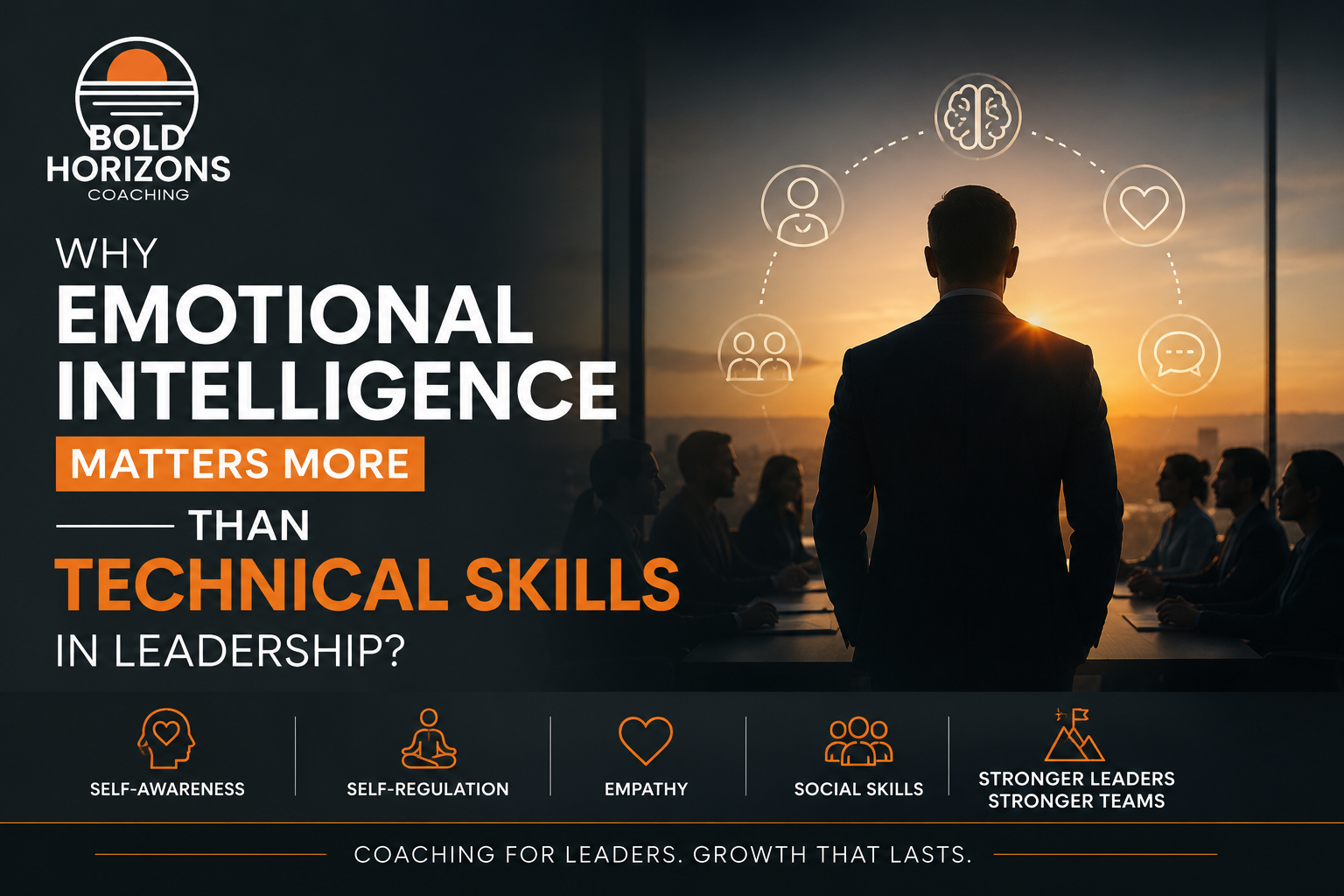
Tom’s story is common because organizations frequently promote based on the skills that got someone to a role, not the skills the role itself requires. Technical mastery earns a leader their seat. Emotional intelligence determines whether they can actually lead the people now sitting around them.
What Emotional Intelligence Means in a Leadership Context
Psychologist Daniel Goleman’s widely referenced framework breaks emotional intelligence into self-awareness, self-regulation, motivation, empathy, and social skill. In leadership, these translate into very practical behaviors: noticing your own frustration before it leaks into your tone, staying composed when a plan falls apart, and reading the room accurately enough to know when a team needs encouragement rather than another set of instructions.
None of this diminishes the value of technical expertise. A leader still needs to understand their domain well enough to make sound decisions. But expertise alone cannot build trust, motivate a discouraged team, or navigate the inevitable friction of managing people with different working styles and different needs.
Why Technical Skill Alone Creates a Ceiling
Leaders who rely primarily on technical authority often manage well in calm conditions and struggle disproportionately during pressure. When a project is behind schedule or a mistake has real consequences, a technically focused leader’s instinct is often to solve the problem directly, sometimes by taking over rather than coaching the team through it. This response can fix the immediate issue while quietly teaching the team that their own judgment is not trusted.
Over time, this pattern creates a ceiling. Team members stop bringing forward half-formed ideas, since they expect to be corrected rather than developed. The leader ends up doing more of the thinking than the team combined, which does not scale, no matter how talented that leader is individually.
Building Emotional Intelligence as a Practical Skill
Emotional intelligence is sometimes treated as an innate personality trait, but it is more accurately understood as a set of habits that can be strengthened with deliberate practice, much like any other leadership capability.
• Pause before responding when frustrated, giving yourself a moment to choose a reaction rather than react automatically
• Ask questions before offering solutions, especially when a team member brings you a problem
• Name emotions accurately, both your own and what you observe in others, rather than glossing over tension
• Seek feedback specifically about how your reactions land with your team, not just about your decisions
• Practice active listening by summarizing what you heard before responding, particularly in disagreements
Tom, once he began working with a coach, realized his habit of jumping straight to the correct answer was not a strength in every context. In technical reviews it built confidence. In coaching conversations with struggling team members, it shut down the very reflection those conversations were meant to encourage.
The Coaching Process for Building Emotional Intelligence
Because emotional intelligence gaps are often invisible to the person who has them, coaching plays a distinct and valuable role. A coach draws on structured feedback tools, such as 360-degree assessments, to surface patterns a leader cannot easily see from the inside, then works with the leader to practice new responses in real, specific situations rather than abstract theory.
This process takes longer than learning a new technical skill, since it involves changing habitual reactions built over years. It also tends to be some of the most durable growth a leader experiences, because it reshapes how they show up across every relationship they manage, not just one particular task.
The Bottom Line
Technical skill will always matter in leadership, but it is rarely what determines whether people want to work for someone or leave the first chance they get. Emotional intelligence is what allows expertise to translate into trust, and trust is what makes a team willing to bring their best thinking forward.
Tom’s team stopped shrinking in meetings once he learned to ask before answering. The three engineers who had requested transfers withdrew their requests within the same quarter, not because the work had changed, but because working with him finally felt different.
Bold Horizons Coaching helps technically strong leaders build the emotional intelligence their roles now require, through personalized coaching grounded in real feedback and practical practice. If your expertise has outpaced how your team experiences you day to day, we would welcome the conversation.