Most people have a story about a team-building event they would rather forget: the forced icebreaker, the scavenger hunt that rewarded the loudest voices, the enthusiastic facilitator—and the quiet return to old habits on Monday morning.
The disappointment is understandable, but it does not mean the idea itself is flawed. More often, the design is. Well-designed team building workshops focus less on entertainment and more on the relationships, communication, and shared purpose that shape how a group performs when it matters most.
What Separates Effective Workshops From Forgettable Ones
The difference lies in intention. Forgettable events aim to create a pleasant moment; effective workshops are designed to create lasting change in how people work together. They begin with real challenges—such as unclear roles, strained handoffs, or a lack of trust—and give participants a constructive, supportive way to explore and address them.
Fun can certainly be part of the experience. It is most valuable, however, when it opens the door to honest conversation rather than taking its place.
From Pressure to Possibility
Imagine a high-performing team operating under sustained pressure throughout the year. Although the team continues to deliver, the manager recognizes signs of burnout and mounting frustration. Finger-pointing from other departments, friction within the group, and a growing sense that their contributions are neither seen nor appreciated have begun to erode morale. Even their conversations remain focused on what is going wrong rather than on what might be possible.
Rather than leading the team through a series of stand-alone exercises, the coach helps members examine what may be holding them back. As an initial step, the team identifies the barriers, assumptions, and interpretations shaping individual reactions and group dynamics. Through thoughtful questions and guided reflection, the coach creates the conditions for team members to speak openly, challenge familiar narratives, and become curious about one another’s perspectives without judgment.
This deeper work enables the team to move beyond describing the problem and begin working together toward solutions. Members recognize the value of their collective contribution, see how their own patterns influence results, and identify more constructive ways to collaborate. The team leaves with renewed appreciation for one another and noticeably stronger, more productive energy—better positioned to reach its full potential.
What Strong Team Building Workshops Cover
| Focus Area | What Happens | What the Team Gains |
| Trust | Participants explore working styles, expectations, and barriers to openness | Greater trust and psychological safety |
| Communication | Teams practice listening, candid feedback, and clear communication | Fewer misunderstandings and stronger dialogue |
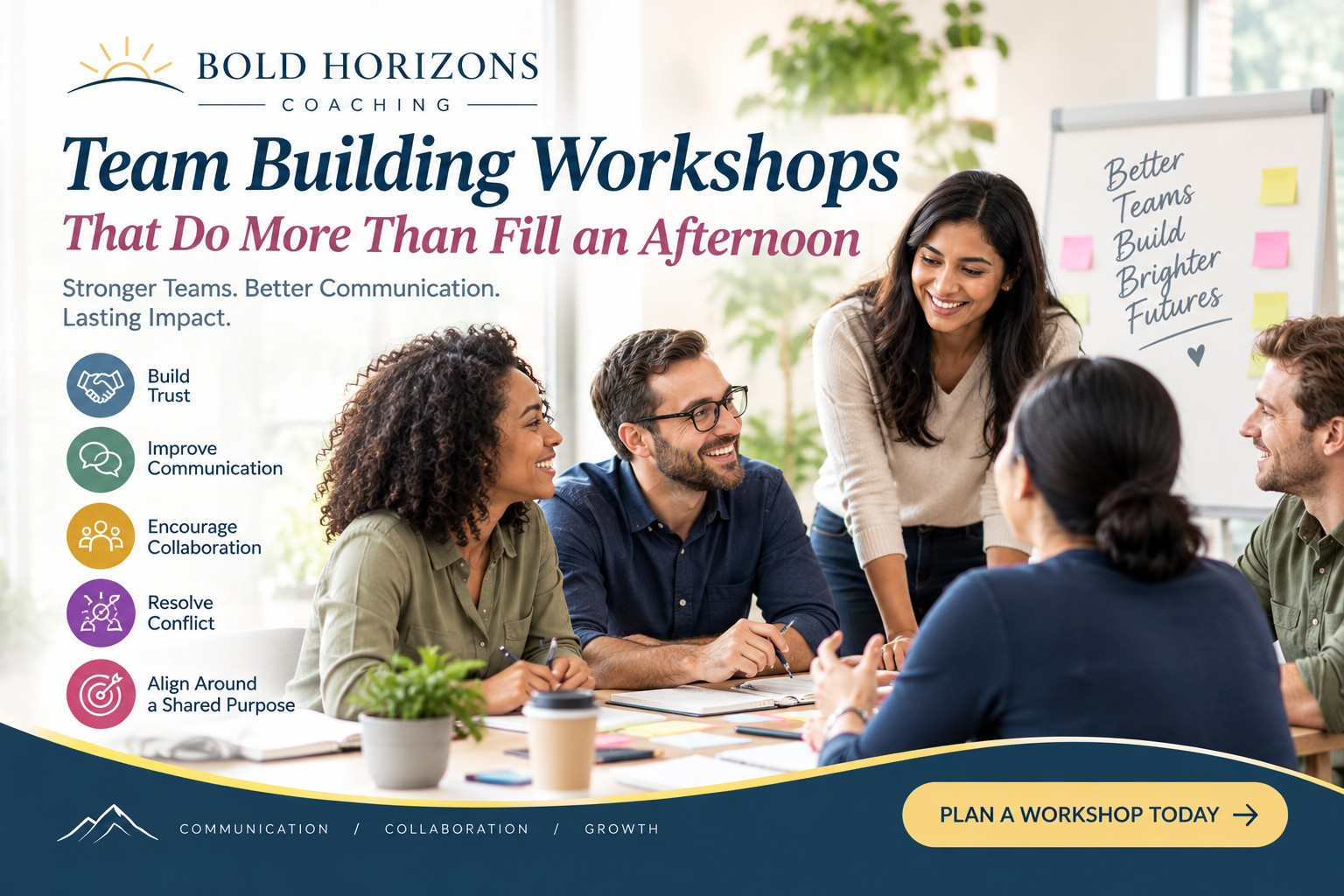
| Collaboration | Groups examine real challenges and solve them together | More effective collaboration and shared accountability |
| Conflict | Teams address tension and practice constructive conversations safely | Calmer, more productive conflict resolution |
| Purpose | Teams clarify shared goals, roles, and contributions | Stronger alignment, ownership, and purpose |
The Coaching Advantage
A coach-led workshop does more than engage a group; it helps people recognize the patterns influencing how they think, communicate, and respond. Bold Horizons Coaching designs team and group sessions around iPEC’s Core Energy Coaching approach, which explores how thoughts, beliefs, and emotions shape behavior at work. When team members better understand their own reactions, they are less likely to take a colleague’s tone personally and more likely to become curious about what may be driving it.
The Energy Leadership Index® assessment can provide a shared vocabulary for those conversations. Instead of labeling a colleague as difficult, team members can explore how different energy levels influence the way each person communicates under pressure. The conversation shifts from criticism to curiosity, creating greater awareness and more constructive choices.
Signs Your Team Could Benefit
- Meetings are dominated by a few voices while others stay silent
- The same disagreements return again and again
- New hires take a long time to feel comfortable
- Departments blame one another when projects slip
- Energy is low even though the workload is manageable
- A major change, such as growth or restructuring, is on the horizon
How to Get the Most From a Workshop
- Define the goal first. Be clear about whether you want to improve communication, strengthen trust, clarify roles, or address another specific need.
- Involve the team. People are more engaged when they have a voice in shaping the topics and priorities.
- Choose a trained facilitator. Experience and skill are especially important when conversations become sensitive or complex.
- Plan the follow-up. Identify one or two commitments the team will put into practice after the workshop.
- Review progress together. Revisit those commitments within a few weeks to reinforce learning and maintain momentum.
Formats to Consider
Every team is different, and workshop formats should reflect that. Some teams benefit from a single, focused session addressing one pressing issue. Others gain more from a series of sessions over several weeks, allowing time to practice new approaches between meetings. Leadership teams may prefer a smaller, more in-depth format, while larger groups may benefit from interactive exercises designed to involve everyone.
The best format is the one that aligns with your goals, schedule, and team dynamics. A brief conversation with a facilitator can help clarify the right approach.
The Person Behind the Work
Debbie Holderman, founder of Bold Horizons Coaching, is a Certified Professional Coach with experience leading and developing high-performing teams. Her workshops are interactive and participatory, creating space for open communication, creative thinking, and a shared sense of purpose.
She believes teams are strongest when every person feels heard, valued, and able to contribute—and she designs each session with that goal in mind.
Frequently Asked Questions
1. How long should a team building workshop last? The right length depends on your goals. A focused session of a few hours can address one theme, while a series held over several weeks can support deeper, more sustainable change.
2. Can workshops help a team that is already performing well? Yes. High-performing teams often use workshops to strengthen communication, prepare for growth, and sustain healthy energy. Even strong teams benefit from continued learning and reflection.
3. How many people can take part? Workshops can be designed for small leadership groups or larger departments. The facilitator can adapt the format so that everyone has a meaningful opportunity to participate.
4. What if some team members are skeptical? Skepticism is common and understandable. Practical, interactive sessions grounded in real workplace challenges often build engagement because participants can see their immediate relevance.
5. How do we sustain progress afterward? Select a few practical commitments, schedule a brief progress review, and consider follow-up coaching. Consistent practice is what turns a productive workshop into lasting change.
Conclusion
A workshop earns its place when participants leave with greater trust, clearer communication, and practical actions they can apply on Monday. Choose a facilitator who listens first, designs around your team’s real challenges, and remains invested in what happens after the session ends.
For leaders who also want to grow personally, pairing group sessions with leadership development coaching can strengthen individual effectiveness and team performance at the same time.
To plan a workshop that fits your people and your goals, contact Bold Horizons Coaching and begin with a conversation.