Most organizations approach leadership development in much the same way: a few courses, a reading list, and perhaps a two-day program that ends with a certificate. Months later, leaders may be better informed, yet their behavior remains largely unchanged.
The reason is simple: leadership is not merely a body of knowledge to absorb. It is a way of thinking, relating, and responding—shaped by what happens within the leader. Meaningful growth begins there and becomes sustainable through guidance, practice, and reflection over time.
Why Knowledge Alone Is Not Enough
A leader can understand delegation and still hold on to every task. They can recite the principles of effective feedback and still avoid a difficult conversation for weeks. The gap between knowing and doing is often shaped by beliefs, habits, and emotions: fear of losing control, the need to be liked, or concern that mistakes will define them.
Development that overlooks this deeper layer may produce short-term improvement. Development that addresses it can create lasting change.
A Leader’s Story
Consider Daniel, a department head whose team respects his expertise but rarely brings him bad news. Projects run late, and he hears about problems only when they become urgent. Daniel assumes his team is careless.
Through coaching, Daniel examines how he responds when someone raises a problem. He recognizes that his first instinct is to ask who made the mistake. Over time, his team has learned that honesty carries a cost. Daniel begins responding with curiosity instead: “What happened, and what do we need?” Within a few months, problems surface earlier and projects recover sooner. His technical expertise has not changed; his response has.
The Building Blocks of Effective Leadership Development
Effective leadership development addresses several interconnected dimensions:
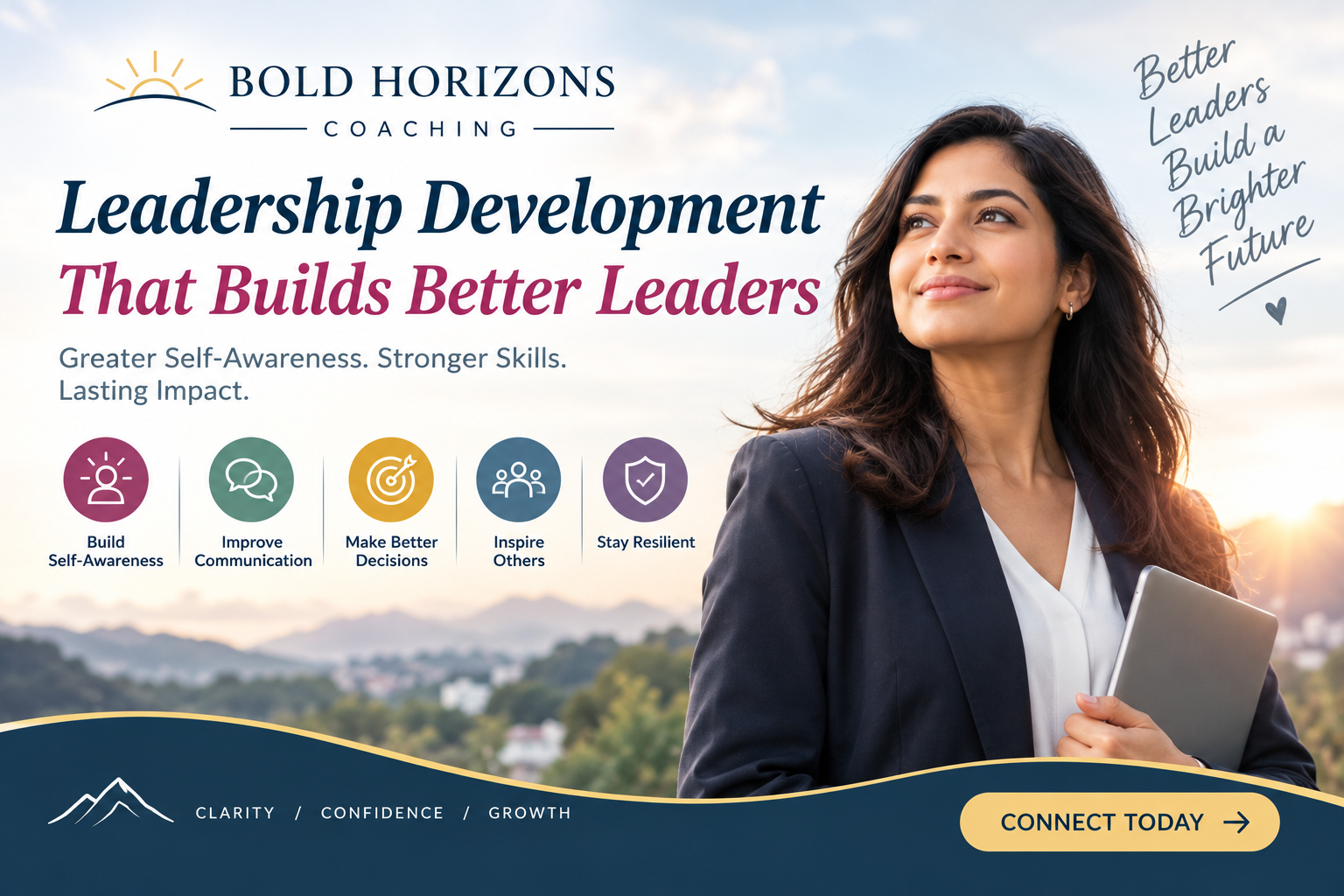
- Self-awareness: Understanding your triggers, strengths, and blind spots.
- Communication: Speaking clearly, listening fully, and handling disagreement with skill.
- Decision-making: Weighing information, trusting judgment, and owning outcomes.
- Influence: Inspiring others without relying on authority alone.
- Resilience: Staying steady during uncertainty and change.
- Vision: Setting direction that people understand and want to follow.
Coaching Compared With Other Approaches
| Approach | Strength | Best Used For |
| Classroom training | Shares frameworks and common language | Building foundational knowledge |
| Reading and self-study | Flexible and low cost | Expanding perspective |
| Mentoring | Draws on another leader’s experience | Learning how a path was navigated |
| One-on-one coaching | Personalized, confidential, action-focused | Changing behavior and mindset |
| Group workshops | Builds shared skills and trust | Aligning teams and cultures |
The most effective development strategies often combine several of these approaches. Coaching provides the personalized support that helps leaders translate insight into consistent daily behavior.
The Role of Assessment and Awareness
Self-awareness can be difficult to develop alone because everyone has blind spots. Structured assessments help bring those blind spots into view. The Energy Leadership Index®, used by Bold Horizons Coaching, offers a research-based perspective on how a leader responds to challenges, while a 360-degree assessment gathers input from colleagues, direct reports, and managers.
Together, these tools replace guesswork with meaningful evidence. A leader who discovers that others experience her as rushed or distant gains insight she may not have uncovered on her own. A coach can then help her interpret that feedback and turn it into focused action.
What Makes a Development Journey Succeed
- Clear goals. Leaders define success in observable behaviors, not just broad intentions.
- A trusted partner. A coach offers candid reflection, thoughtful challenge, and consistent accountability.
- Real-world practice. Leaders test new approaches in actual meetings, decisions, and conversations.
- Regular review. Progress is evaluated and refined rather than assumed.
- Organizational support. The workplace encourages growth and allows room for thoughtful experimentation.
The Bold Horizons Coaching Approach
Bold Horizons Coaching was founded by Debbie Holderman, a Certified Professional Coach with hands-on experience leading and developing high-performing teams. Her approach is grounded in iPEC’s Core Energy Coaching methodology, which helps leaders identify the thoughts and emotions influencing their actions and choose responses that better support their goals.
Rather than prescribing a one-size-fits-all path, the coaching process is collaborative. Debbie serves as a sounding board, accountability partner, and steady guide, helping leaders build clarity and confidence. Her philosophy is that when one person grows, the positive effects extend to families, teams, and entire organizations.
Who Benefits Most
Leadership development can create value at every stage of a career:
- Emerging leaders preparing to lead their first team
- Experienced managers seeking to strengthen or refresh their approach
- Senior executives navigating complex decisions and heightened visibility
- Entrepreneurs shaping culture as their organizations grow
- Women leaders seeking space to strengthen their voice, confidence, and presence
Frequently Asked Questions
1. What is the difference between leadership development and leadership coaching? Leadership development is the broader process of growing as a leader and may include training, mentoring, assessments, and coaching. Coaching is one method within that process, offering personalized, confidential, and action-oriented support.
2. How long does it take to see results? Many leaders notice greater self-awareness within the first few sessions. Observable behavioral changes typically develop over several months of consistent practice and reflection.
3. Do I need to be in a formal leadership role to benefit? No. Anyone who influences others, manages projects, or plans to move into leadership can benefit from developing these skills early.
4. What is the Energy Leadership Index®? It is a research-based assessment that helps individuals understand how they respond to challenges and how their mindset influences their leadership. A coach reviews the results and helps translate the insights into actionable goals.
5. Is leadership coaching confidential? Yes. Individual coaching is conducted under clear confidentiality agreements, creating space for candid discussion of real challenges.
Conclusion
Leaders grow when they examine how they think and act—and when they have a skilled partner who helps them practice more effective responses. The result is not only a stronger leader, but also a stronger organization.
To extend that growth across a team, individual coaching can be paired with team-building workshops that help new habits take root in the broader culture. When you are ready to begin, contact Bold Horizons Coaching to start the conversation.