
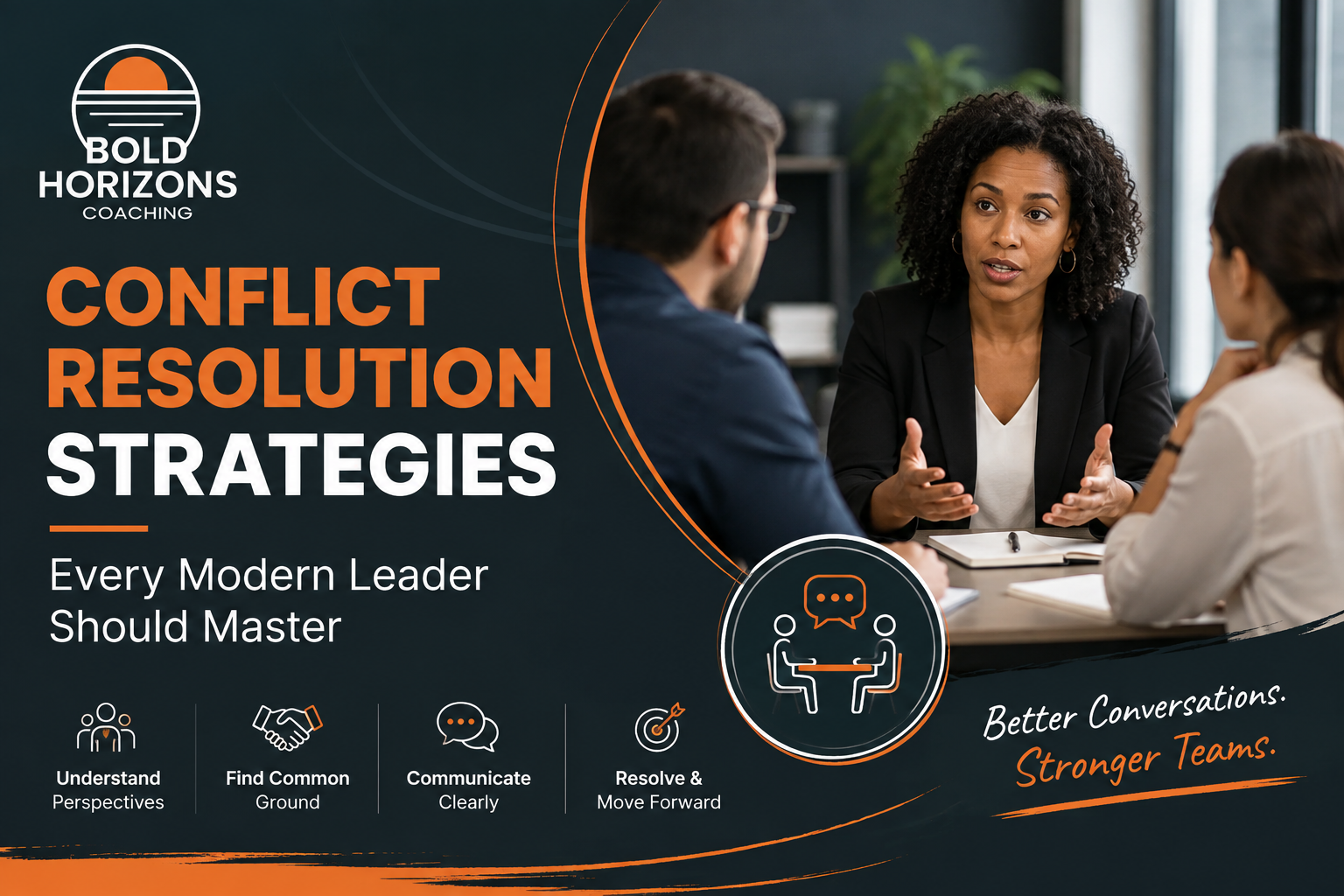
Every disagreement now traveled through email, copied to three other people, with a tone that grew colder each time. Priya had avoided stepping in for weeks, hoping it would resolve on its own. It did not. By the time she finally sat both of them down together, the disagreement over a project timeline had quietly become a disagreement about respect, and untangling the two took far longer than it would have in week one.
Conflict is not a sign that a team is unhealthy. It is a sign that people care enough to disagree. What determines whether conflict strengthens a team or slowly corrodes it is not whether it happens, but how a leader responds when it does.
Why Leaders Avoid Conflict, and Why That Backfires
Many leaders delay addressing conflict because they hope it will resolve naturally, or because confrontation feels uncomfortable and risks damaging a relationship. This instinct is understandable, but research on workplace conflict consistently shows that unaddressed disagreements rarely fade. They tend to intensify, spread to more people, and eventually surface in ways far more disruptive than the original disagreement.
Avoidance also sends an unintended message to the team: that unresolved tension is simply part of how things work here. Over time, that message discourages people from raising concerns early, which is precisely when they are easiest to resolve. What starts as a scheduling disagreement can, weeks later, become a story about who the leader trusts and who they do not, even when that was never the leader’s intention.
Understanding Different Conflict Styles
Not every disagreement calls for the same response. The widely used Thomas-Kilmann model identifies five distinct approaches to conflict, each useful in different situations. Leaders who rely on only one style, regardless of context, tend to handle some conflicts well and others poorly.
| Style | Best Used When | Risk If Overused |
| Collaborating | The issue is important and both parties’ needs can be met | Can be slow for minor issues |
| Compromising | A quick, fair resolution matters more than the ideal outcome | May leave root causes unresolved |
| Accommodating | The relationship matters more than the specific issue | Can lead to resentment if used too often |
| Competing | A fast, decisive resolution is genuinely necessary | Damages trust when overused |
| Avoiding | The issue is truly minor or will resolve on its own | Allows real problems to fester |
A Practical Approach to Resolving Team Conflict
When conflict does need direct intervention, structure matters more than good intentions. Leaders who resolve conflict well tend to follow a consistent process rather than improvising each time, which keeps the conversation focused on the issue rather than the personalities involved.
• Meet with each person individually first, to understand their perspective without the other person present
• Identify the actual issue underneath the disagreement, which is often different from the surface complaint
• Bring both parties together with a clear, neutral framing of the shared problem to solve
• Focus the conversation on specific behaviors and impacts, not character judgments
• Agree on concrete next steps and a follow-up point to confirm the resolution is holding
Priya’s mistake was not caring too little. It was skipping the individual conversations and going straight to a joint meeting, which meant both employees arrived defensive rather than ready to problem-solve. Once she restructured the process with individual conversations first, the joint meeting took a fraction of the time and reached a resolution both sides actually kept.
Why This Is a Coachable Skill
Conflict resolution is uncomfortable for most leaders, including highly experienced ones, because it requires holding steady in a tense moment rather than rushing to smooth things over. Coaching helps leaders build this capacity through practice and reflection, often role-playing difficult conversations before they happen in real time.
A coach also helps leaders notice their own default conflict style and its blind spots. A leader who instinctively accommodates may need support learning to hold a firmer line. A leader who instinctively competes may need support learning to listen longer before responding. Neither pattern is wrong on its own, but both become limiting when applied without adjustment to the situation.
The Bottom Line
Conflict is inevitable in any team doing meaningful work. What separates strong leaders from struggling ones is not the absence of disagreement, but a deliberate, structured approach to addressing it before it hardens into something bigger. Leaders who develop this skill create teams that argue about ideas and still trust each other afterward.
Priya’s two team members eventually became close collaborators again, something neither expected during the weeks of cold email chains. The shift did not come from the disagreement disappearing. It came from Priya finally giving it the direct, structured attention it needed.
Bold Horizons Coaching helps leaders build genuine confidence in navigating conflict, through coaching and team workshops grounded in practical, real-world scenarios. If conflict on your team tends to simmer rather than resolve, we would welcome the opportunity to help.