
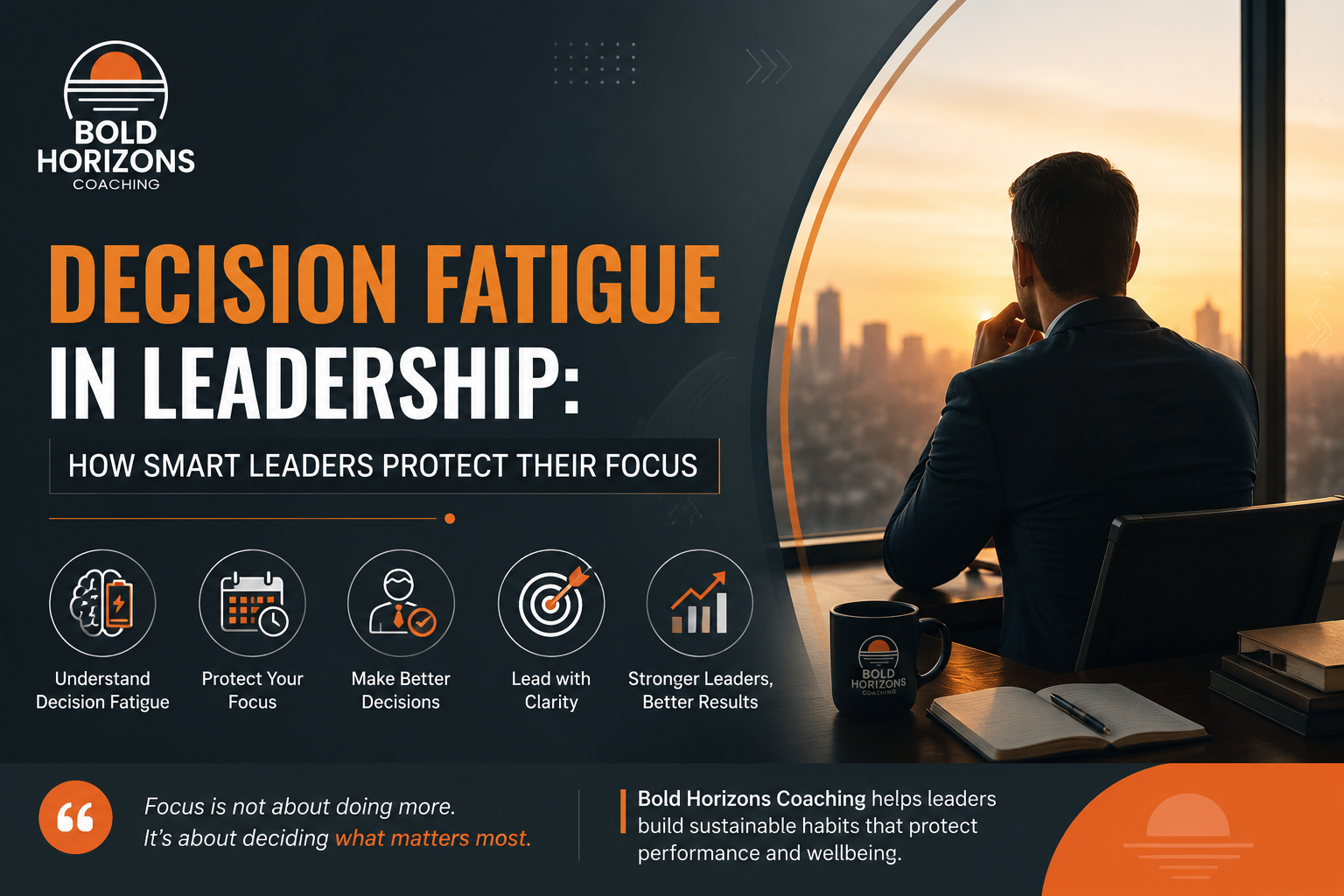
Decision fatigue is the well-documented decline in the quality of a person’s decisions after a long stretch of decision-making, regardless of how important each individual choice was.
For leaders, whose days are often an unbroken sequence of small and large decisions, this is not an occasional inconvenience. It is a daily tax on judgment, and it quietly shapes far more outcomes than most leaders realize.
Why Leaders Are Especially Vulnerable
Unlike many roles, leadership rarely offers a clear boundary between decisions that matter and decisions that do not. A leader might move from approving a budget to resolving a scheduling conflict to weighing in on a hiring decision, all within the same hour. Each decision draws from the same limited mental resource, and that resource depletes regardless of the size of the choice.
This is compounded by the fact that many leaders wear fatigue as a badge of dedication. Long hours and constant availability are often mistaken for commitment, when in reality they are frequently the reason a leader’s afternoon decisions are measurably worse than their morning ones.
The Research Behind the Pattern
One of the most cited illustrations of this effect comes from a study of judges’ parole decisions, which found favorable rulings were significantly more common earlier in the day and right after a break, and dropped substantially as the session wore on. The judges were not making worse decisions because the cases changed. They were making worse decisions because their capacity for careful judgment had been steadily spent.
Leaders face a version of this every day, just with less visible stakes than a parole hearing. A hiring decision made at nine in the morning and one made at five in the evening are not equally considered, even when the leader believes they both gave the same attention.
The Myth of the Leader Who Never Stops
Corporate culture often celebrates the leader who answers emails at midnight and never seems to slow down. This image is appealing, but it works against the very outcomes it is meant to signal. A leader operating on depleted judgment tends to default to whatever is safest, easiest, or loudest in the moment, which is rarely the same as what is best for the organization. Protecting focus is not a wellness indulgence. It is a performance strategy.
Protecting Focus Without Protecting Ego
The instinct many leaders have is to simply try harder or push through, which tends to make the problem worse rather than better. What actually helps is structural, not willpower-based. Leaders who manage decision fatigue well treat their focus as a finite resource to be allocated deliberately, the same way they would allocate budget or headcount.
• Schedule the decisions that matter most for the first half of the day, when judgment is sharpest
• Reduce trivial daily decisions by creating simple defaults, such as a consistent routine for recurring choices
• Build real breaks into the calendar, not just shorter meetings back to back
• Delegate decisions that do not require the leader’s specific judgment, rather than reviewing everything personally
• Notice personal fatigue signals, such as irritability or a pull toward the easiest option, as a cue to pause rather than decide
Where Coaching Fits In
Executive coaching often surfaces decision fatigue indirectly, through conversations about frustration, inconsistency, or a nagging sense that a leader is not showing up as their best self by the end of the day. Raj came to coaching believing his afternoon irritability was a personality flaw. His coach helped him see it as a predictable, manageable pattern rather than a character issue, which changed how he responded to it entirely.
A coach also helps leaders build the specific structures that protect focus, since generic advice to rest more rarely survives contact with a demanding calendar. The plan has to fit the leader’s actual role, team, and rhythm, which is exactly the kind of tailored work coaching is built for.
The Bottom Line
Decision fatigue is not a sign of weak discipline. It is a predictable cost of leadership, and like any cost, it can be managed once it is named and understood. Leaders who protect their focus deliberately, rather than assuming willpower will carry them through every hour of the day, consistently make better decisions when it counts most.
Raj restructured his calendar so that the decisions requiring real judgment happened before noon, and the routine ones filled the afternoon. Within weeks, his own sense was that he had become a sharper leader. His team noticed it too, in ways they described simply as him seeming more like himself.
Bold Horizons Coaching helps leaders build sustainable habits that protect both performance and wellbeing. If your best thinking seems to be running out before your day does, a coaching conversation may help you find a more deliberate rhythm for the decisions that matter most.