The most innovative teams aren’t the ones with the smartest people. They’re the ones where everyone feels safe enough to speak.
In 2012, Google launched Project Aristotle, a two-year study of hundreds of its own internal teams, designed to answer one question: What makes a team effective? The results surprised nearly everyone. The highest-performing teams were not the ones with the most elite credentials or the highest IQs. The single greatest predictor of team effectiveness was psychological safety.
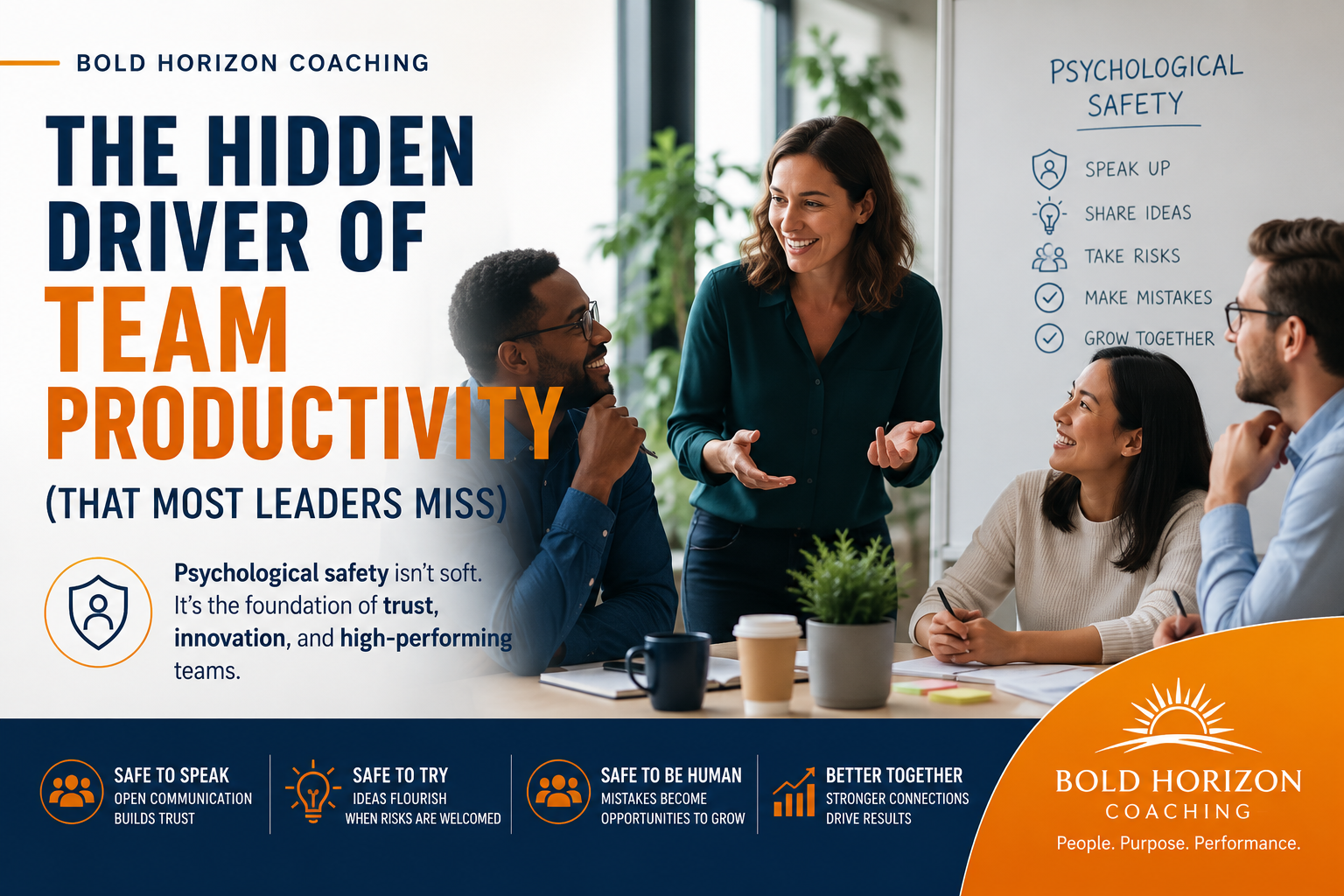
Psychological safety, the belief that you can speak up, take risks, and make mistakes without fear of punishment or humiliation, is not a soft, feel-good concept. It is a measurable business driver. And the good news? It can be built deliberately, with the right tools and the right facilitation.
What Psychological Safety Is (and Is Not)?
Psychological safety is not about making everyone feel comfortable all the time. It is not the absence of accountability or a license to avoid hard conversations. As Harvard Business School professor Amy Edmondson defines it, it is simply “’a belief that the team is safe for interpersonal risk-taking.”’
Teams with strong psychological safety disagree openly, share bad news early, and admit mistakes without fear of being shut down. They innovate faster, recover from setbacks more quickly, and report higher job satisfaction. Teams without it, no matter how technically skilled, consistently underperform.
The Role of Group Workshops in Building Safety
You cannot install psychological safety with a company-wide email. It grows through shared experience, structured dialogue, and the slow, intentional building of trust. This is why group coaching workshops are one of the most effective tools available for creating it.
At Bold Horizon Coaching, our group workshops move teams through a deliberate arc from awareness to vulnerability to collective action. At the core of this experience are four essential principles:
Creating a shared, psychologically safe space: Every workshop begins by establishing an environment where people feel comfortable speaking openly, even when the conversation is difficult. Clear ground rules such as “assume positive intent” and “listen without interruption” set the tone, often reinforced by simple opening exercises where participants share current challenges. This signals that honesty is not only accepted, but expected.
Developing a structured understanding of team dynamics: Rather than assigning blame, teams are guided to explore patterns in how they work together. For example, instead of asking “Who is responsible for communication breakdowns?”, the conversation shifts to “Where in our process does communication break down?” Using shared frameworks, the focus moves from individuals to systems, creating insight without defensiveness.
Building a clear and inclusive team purpose: Alignment emerges when the team co-creates a purpose everyone believes in. Through facilitated dialogue, participants answer questions like, “What are we here to achieve together?” and “Why does it matter?” The result is a shared direction that reflects the voices of the entire team, increasing ownership and commitment.
Driving momentum through accountability partnerships: Lasting change requires follow-through. Participants are paired into accountability partnerships, each committing to one or two concrete behavior changes, such as inviting more input before making decisions. Regular check-ins ensure that insights from the workshop translate into consistent, everyday action.
What Shifts After a Workshop?
Teams that go through a well-designed group coaching experience consistently report a meaningful shift in how they interact. Meetings feel more productive. Feedback flows more freely. People start bringing ideas they previously kept to themselves. Culture begins to change, not because of a new policy, but because the people in it have changed.
One of our Florida corporate clients, a mid-size healthcare organization, brought us in to work with a team that had not been meeting their full potential for nearly two years.
Within three months of a group coaching engagement, meeting participation increased dramatically, conflict became constructive rather than avoided, and innovation proposals from the team quadrupled.
Psychological safety is the foundation that every high-performing team is built on. At Bold Horizon Coaching, our group workshops are designed to build that foundation, one honest conversation at a time.